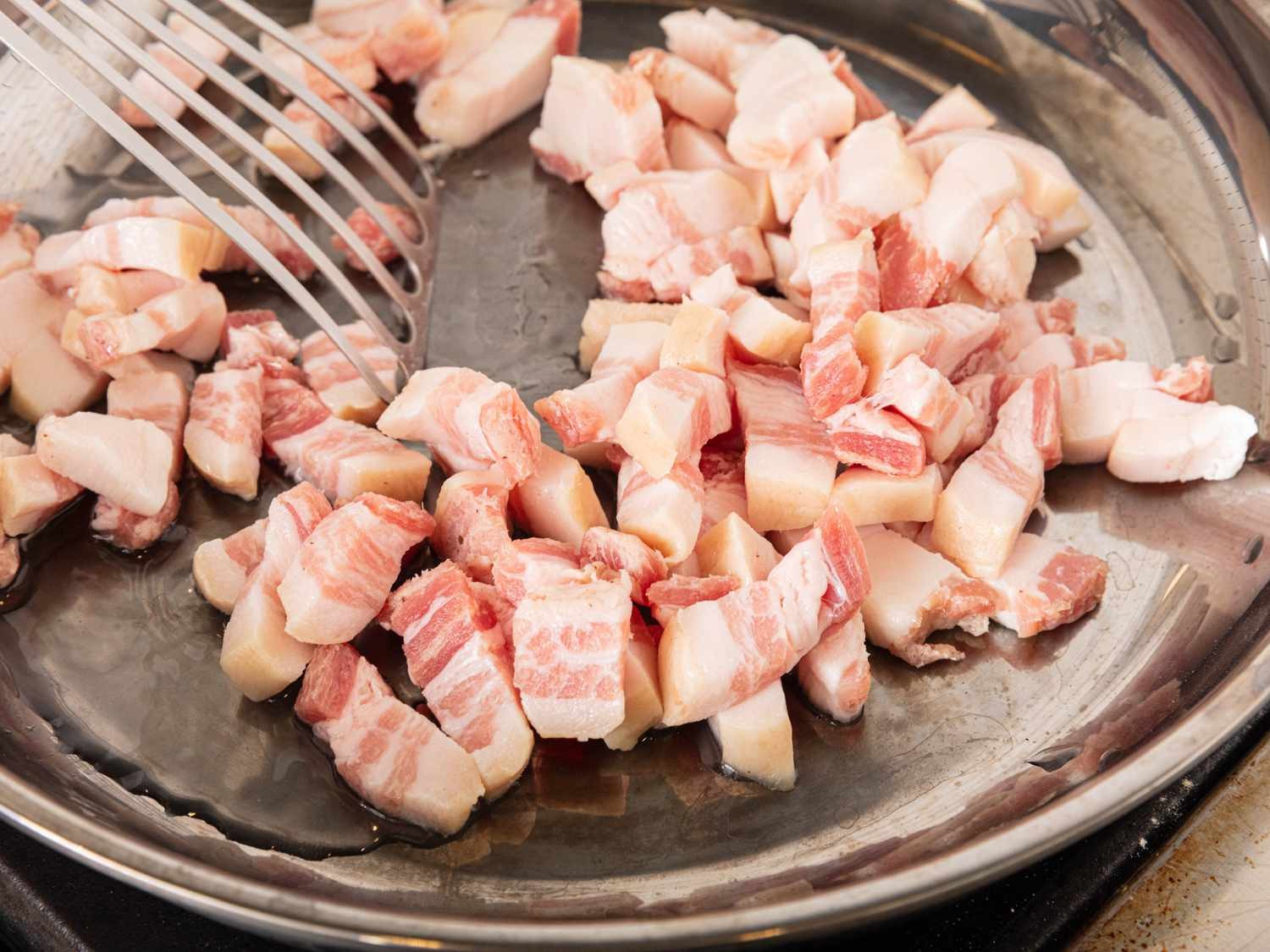
Bacon’s frustrating tendency to turn slippery and tear when cut at room temperature isn’t just annoying—it’s due to the complex composition of animal fats. This is a common problem that chefs solve with a simple trick: keeping it very cold.
The Science of Slippery Bacon
Pork fat isn’t a single melting point substance. Instead, it’s a mix of different saturated and unsaturated fats that liquefy over a wide range of temperatures. Even at room temperature, some fats begin to melt, making the bacon squishy. Adding body heat while cutting accelerates this process, turning firm slices into ragged bits.
The Restaurant Solution: Extreme Cold
The key is to maintain the fat in a solid state while cutting. Restaurants often keep bacon and other fatty pork products frozen solid, cutting off portions as needed. While freezing causes strips to stick together, a quick thaw on a metal baking sheet rapidly chills the fat enough to slice cleanly.
A Faster Home Method
For home cooks, there’s no need to fully freeze. A 10–15 minute stint in the freezer before cutting is enough to firm the fat without solidifying it completely. This makes slicing bacon much easier, preventing the frustrating mess of torn strips.
The takeaway: Cold fat is firm fat. Whether you freeze bacon for extended storage or chill it briefly before slicing, keeping it cold is the straightforward solution to a common kitchen annoyance.