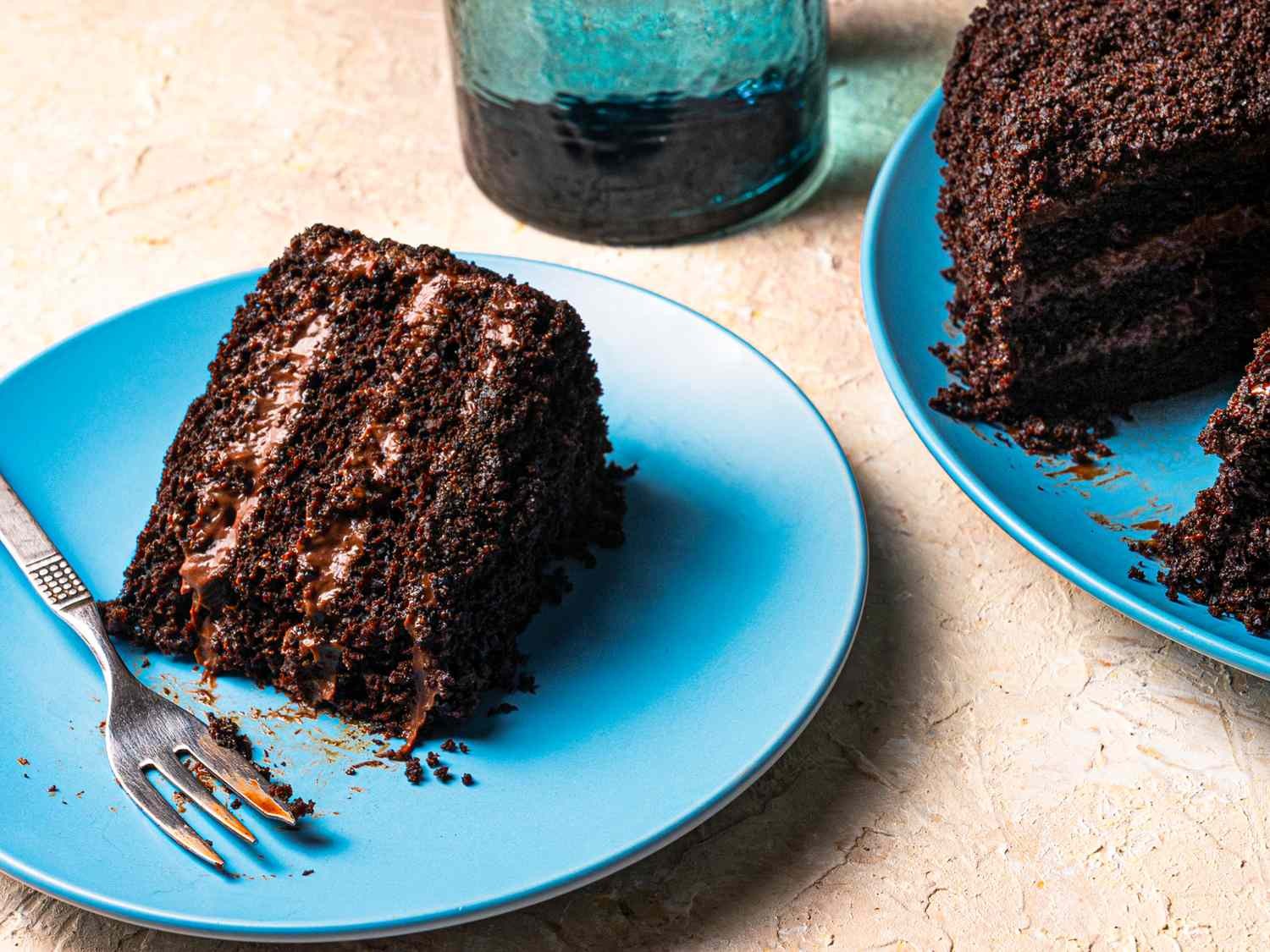
Brooklyn Blackout Cake is a legend – a fiercely dark, intensely chocolate dessert born from the grit of mid-20th century New York. The cake’s story begins with Ebinger Baking Company, a Brooklyn institution that shuttered in 1972, taking its precise recipe with it. What remains is a cultural touchstone: a layered chocolate cake soaked in pudding, then coated in crumbs, delivering a uniquely soft, almost unfinished experience.
The name itself stems from World War II-era “blackout drills” when city lights were extinguished to protect naval ships. This history adds an edge to the cake, connecting it to a period of wartime tension and resilience. But more important is the cake’s construction: instead of buttercream, it’s filled and frosted with chocolate pudding, then finished with crumbs – a deliberate choice that shapes its texture and shelf life.
The Evolution of a Legend
Today, interpretations of Brooklyn Blackout Cake vary widely. Some bakeries produce refined, tall slices with smooth ganache, while others embrace the original’s messy, pudding-soaked form. The Doughnut Plant even offers a Blackout Doughnut, extending the flavor beyond layer cakes. Despite these variations, the core identity persists: deep chocolate, abundant pudding, and a crumb coating that adds both texture and a slightly rustic feel.
The key to understanding this evolution is recognizing the cake’s inherent fragility. The pudding filling, unlike buttercream, introduces moisture without structural fat, causing the cake to soften quickly. This makes it best enjoyed fresh, a deliberate contrast to the shelf-stable nature of other desserts.
Decoding the Perfect Blackout Cake
Creating a true Brooklyn Blackout Cake isn’t about precision; it’s about capturing a feeling. The layers must be soft enough to absorb pudding but firm enough to stack and slice. Dutch-process cocoa is crucial, delivering a darker color and smoother flavor than natural cocoa. Combining brown sugar (for molasses depth) with granulated sugar (for structure) creates the ideal balance. Oil, not butter, keeps the crumb moist as it cools, further enhancing that signature softness.
The pudding itself is equally important. Cocoa powder and cornstarch thicken it to a frosting-like consistency, while unsweetened chocolate deepens the flavor. Cooking the pudding thoroughly activates the cornstarch, preventing a chalky texture. The final product should be thick enough to hold between layers yet still spread cleanly over the cake.
Assembly and Legacy
The process is simple: split the cooled layers, crumble one for coating, and stack the rest with generous pudding spreads. Enrobe the cake in pudding, then press on the crumbs. A brief chill firms the pudding, but the cake is best served promptly.
The original recipe is lost, and that’s part of its charm. Every modern version is an interpretation, shaped by taste, tradition, and a desire to honor a piece of Brooklyn’s culinary history. The magic of the Blackout Cake isn’t in a precise formula; it’s in the spirit of abundance, decadence, and a little bit of delicious chaos.