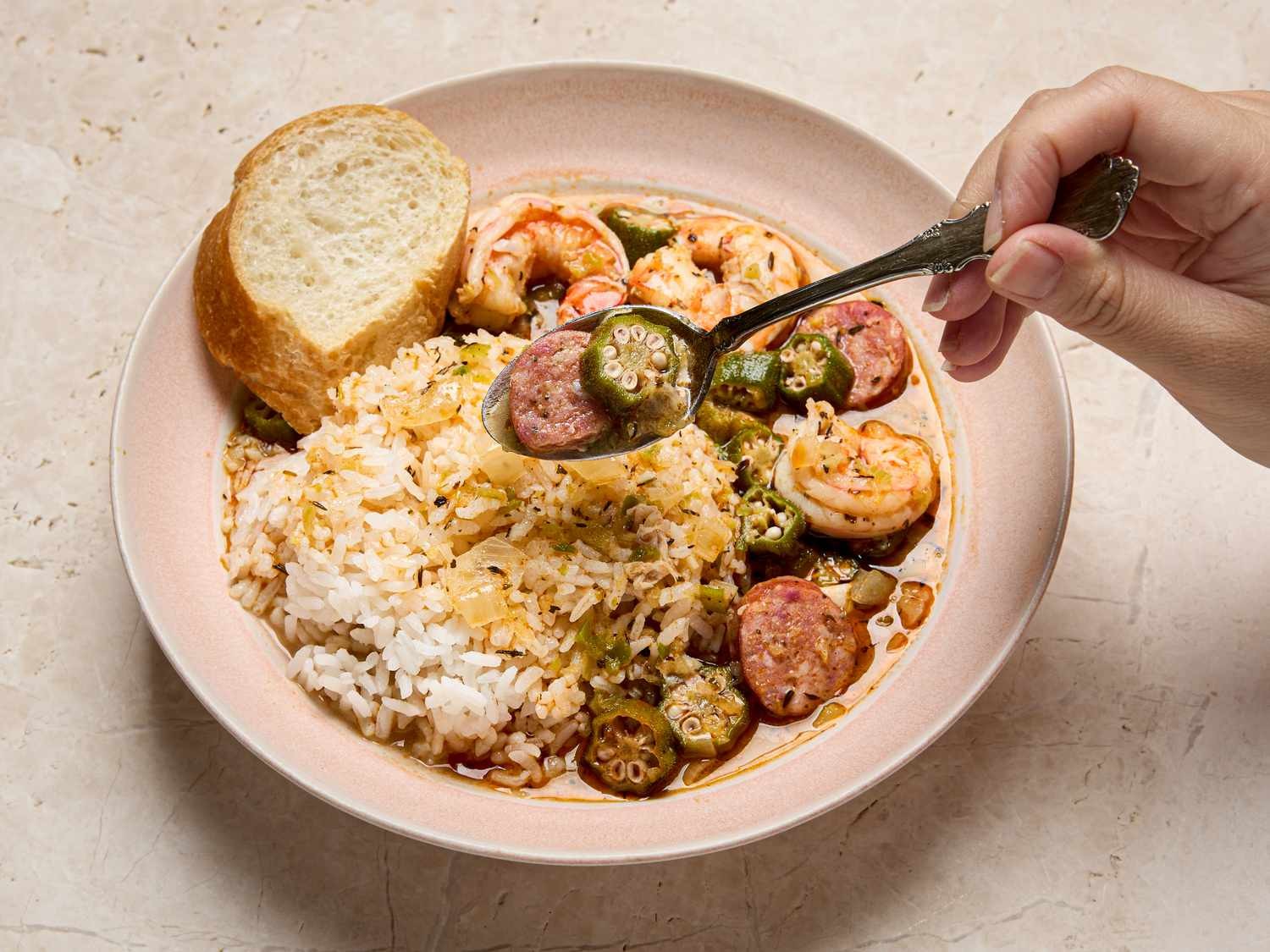
Gumbo, the iconic stew of Louisiana, is less a recipe and more a cultural negotiation. Every family, every region, and even every day can yield a different version—and that’s precisely the point. There’s Creole gumbo versus Cajun gumbo, okra versus filé, seafood, game, or even a meatless Gumbo z’Herbes traditionally served on Holy Thursday. The dish’s flexibility isn’t chaos; it’s a testament to a history of adaptation and shared traditions.
A Legacy of Adaptation
The story of gumbo isn’t just about flavor; it’s a direct reflection of Louisiana’s complex past. The stew wouldn’t exist as we know it without the contributions of enslaved Africans, who brought okra—a key thickening agent—across the Atlantic. The word “gumbo” itself likely originates from West African languages, referring to the stew or the okra itself. Louisiana’s Choctaw people also contributed their own tradition of thickening stews with filé, ground sassafras leaves.
The German influence brought smoked meats and sausages, eventually becoming the andouille and tasso we see today. The French provided the roux, the foundation for many gumbo variations. The roux itself ranges from a light, peanut-butter color for Creole gumbos to a dark, intense base for Cajun versions. The lighter roux thickens more effectively, while the darker one imparts a deeper flavor but thins the stew.
A Symphony of Ingredients
While the roux is essential for many, gumbo can also thrive without it. Some purists stick to okra or filé alone, and others use both. The choice depends on personal preference and what’s available. Tomatoes are a point of contention; some cooks swear by them, while others, like certain families in New Orleans, refuse to add them at all.
No matter the base, gumbo demands layers of flavor. Many cooks start with a roux, but the real trick is seasoning aggressively at every step. From sautéing okra until it loses its slime to simmering the stock, each ingredient should be bold. The key is not just what goes in the pot but how it’s seasoned.
The Art of Patience
Gumbo isn’t a quick meal. It requires time, attention, and a willingness to experiment. Whether thickening with okra, filé, or a carefully crafted roux, the goal is the same: a rich, flavorful stew that embodies the spirit of Louisiana. The dish’s evolution isn’t a matter of perfection; it’s proof that the best traditions are those that adapt and endure.
Ultimately, gumbo is more than just food: It’s a living history, a celebration of diversity, and a reminder that some things are best enjoyed with a little bit of chaos and a whole lot of flavor.