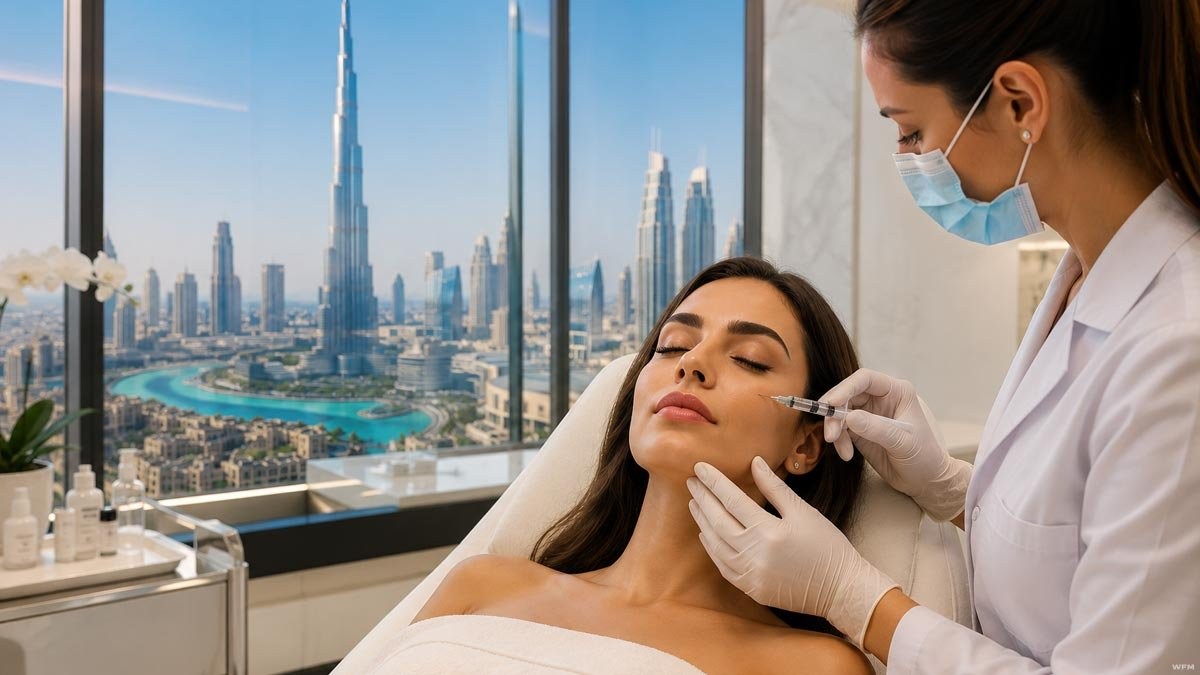
You want one line gone.
Maybe that hollow under your eye. Or the fold near your mouth you’ve been scrutinizing in mirror selfies for three months.
The instinct is simple. See problem, fix problem.
Practitioners in Dubai who actually know their stuff? They stop you there.
They want to map the whole face.
Why Spot-Checking Fails
Faces aren’t Lego bricks.
You don’t just snap a new piece on to fix a wobbly corner.
Aging is structural. When you lose volume in the cheek, the nasolabial fold below it deepens. If you only fill that fold, you’re putting mud on a crumbling wall. It looks wrong. It always looks slightly off, even if you can’t name exactly why.
True improvement comes from fixing the root cause, not the symptom.
The Domino Effect
Ask for nasolabial filler? You might actually need cheek volume.
Ignoring the cheek means the result is temporary and partial. It’s a patch, not a solution.
This goes everywhere.
- Temples. Hollow temples change how your brow looks. No one asks to fix temples. But fixing them fixes the brow without touching a needle near the eyes.
- Chin and Jaw. You want a sharp jaw? You probably need chin projection. Do them separately, the result looks disjointed. Do them together? Suddenly the lower face makes sense.
Data Over Gut Feeling
Old school was all about the practitioner’s eye.
Now? AI analysis software maps proportions with actual precision.
It finds asymmetries you can’t see. It confirms volume patterns with data.
This changes the treatment plan.
Instead of treating what you mention first, the practitioner builds a foundation. They tell you why area A must come before area B. It’s logic, not guessing.
Less Is Often More
Here’s the kicker.
Strategic placement usually means less product.
When you treat scattered symptoms, you waste filler. When you rebuild structure, you need less total volume for a better effect.
Results also age better. A face built on solid structural supports shifts predictably over time. A face patched together from disjointed fixes looks like exactly what it is as you get older. A collage of repairs.
The Consultation Tells the Story
Does your doctor spend time?
Good sign.
Do they just grab the syringe and price the procedure? Run.
Ask this question directly.
Do they assess the whole face before recommending a specific area?
If the answer is yes, you’re in the right place.
Expect them to surprise you.
They might ignore the line you wanted fixed and start elsewhere. It will feel strange. Trust the map. The line you’re worried about often solves itself when the rest of the face falls into place.
Aesthetics.ae works this way.
Facial mapping first. Proportions second. Treatment third.
They explain the why. They don’t just sell you product. They build a plan that holds up when the years stack up.
That’s the difference between looking treated and looking rested.
Which do you prefer?