We live in a culture obsessed with shedding pounds. If you scroll through any social feed or open a magazine, you are bombarded with names that sound like they belong in a museum of failed resolutions: The Atkins Diet, the Cabbage Soup Diet, the Scarsdale Diet. We know these brands. We recognize them. And for many of us, they represent a cycle of counting calories that feels less like a lifestyle and more like a second job.
But before we talk about how to stop gaining weight, we have to understand why it happens so effortlessly. It is not just about willpower. It is about biology. Specifically, it is about how incredibly efficient your body is at hoarding energy.
The Human Machine Runs on Fumes
You might feel like you are working hard to stay thin, but your body is operating with a level of frugality that would make a hybrid car jealous. This efficiency explains why weight gain often feels inevitable, especially as we pass our thirties. Your body is designed to survive, not to look good in jeans.
Consider your baseline energy use. At rest—sitting on the couch, watching TV, or simply existing—your body burns approximately 12 calories per pound of body weight every day. Let’s break that down for clarity. If you weigh 150 pounds, your body consumes roughly 1,800 calories daily just to keep the lights on.
These 1,800 calories are the cost of staying alive. They fuel your heartbeat. They keep your lungs breathing without you thinking about it. They power your brain, regulate your temperature, and keep your internal organs functioning. This is your basal metabolic rate. It is a fixed cost of doing business as a human being.
Motion is Expensive, But Not How You Think
We often assume that exercise is the great equalizer when it comes to calorie burning. We think that because we are sweating, we are torching fat. The numbers suggest otherwise.
Take a marathon. That is 26 miles of running. It is grueling. It requires immense endurance. Yet, a runner burns only about 2,600 calories for the entire distance. That breaks down to roughly 100 calories per mile. Is that a lot? It depends on what you just ate for lunch.
To put this in perspective, compare a human to a gasoline-powered vehicle.
- A typical car gets between 15 and 30 miles per gallon.
- A gallon of gas contains about 31,000 calories.
- A human runner covers 26 miles while burning only 2,600 calories.
If humans could drink gasoline instead of eating hamburgers, we would achieve fuel efficiency of over 300 miles per gallon. On a bicycle, that efficiency skyrockets to more than 1,000 miles per gallon.
Your body is one of the most efficient machines ever designed. It wastes very little energy as heat or friction. It converts food into motion with startling precision. This efficiency is a evolutionary advantage. It allowed our ancestors to survive famines. Today, it makes weight management a uphill battle against millions of years of biological programming.
Taking Calories In
Because your body is so good at minimizing output, the math of weight gain becomes starkly simple. You do not need to eat a massive amount of excess food to gain weight. You just need to consistently exceed that baseline of 12 calories per pound.
The problem is that “excess” is relative. A slice of pizza might seem like a small indulgence. But if that slice adds 300 calories, and your body only needs 1,800 to function, you have created a surplus. Over time, the body stores that surplus. It doesn’t question it. It doesn’t try to burn it off immediately. It just saves it for the next famine.
This brings us to the core challenge of modern dieting. We are trying to outsmart a system that is optimized for scarcity in an environment of abundance. Understanding this efficiency is the first step. The next step is looking at exactly what we are putting into the system.
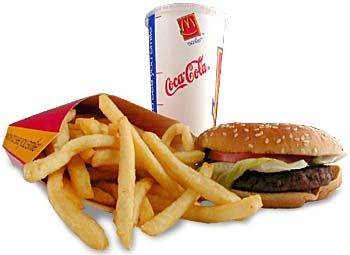
Why fast food meals can easily consume your daily calorie budget
The standard baseline for a person at rest is roughly 1,800 calories a day. That number feels small when you look at what’s on a typical fast food menu. Consider a trip to McDonald’s. Order the Big Xtra meal, which comes with a sandwich, large fries, and a large Coke.
Just that sandwich sits at 710 calories. The fries add 540. The soda brings another 310.
Total: 1,560 calories.
That is nearly your entire daily intake in one sitting. Add an M&M McFlurry for dessert, and you are looking at 630 extra calories. The total jumps to nearly 2,200. You have already exceeded your daily limit before you even leave the parking lot.
Pizza offers a different trap. Pizza Hut’s Meat Lover’s Pan Pizza packs 360 calories per slice. Eat three slices, grab a large drink, and you have consumed 1,390 calories. That leaves only 410 calories left for the rest of the day.
It is easy to underestimate how dense these meals are. We often think of a “light lunch” or a “quick dinner” as harmless. But when you break down the components, the math changes. One meal can wipe out your reserve for the next twelve hours. This is not about willpower. It is about understanding the volume of energy we are ingesting.
Just this one meal provides 1,560 calories you need during a day.
The goal is not to hate fast food. It is to recognize the trade-off. You are trading variety and balance for convenience and intensity. When you know the numbers, you can make a conscious choice. Or you can order the side salad. Or skip the drink. The power lies in the awareness.
What happens when you realize that “just one slice” is actually a significant chunk of your metabolic budget?

It is terrifyingly easy to eat yourself into a surplus. Consider SnackWell’s Crème Sandwich Cookies. They market themselves as the “guilt-free” choice. But if you eat twelve of them, you have consumed 660 calories. That is more than a third of your entire daily caloric allowance. Done in ten minutes. No effort required.
I am not here to judge those products. I have two kids. I go to McDonald’s at least once a week. We are all doing what we can to survive the day. The real issue is structural. In America and most developed nations, finding calories is effortless. Avoiding them is the hard part.
The Convenience Trap
Most of us are overworked. Over-booked. Over-extended. When you are running on fumes, convenient food wins. Every time.
Look at a typical day for someone just trying to keep their head above water:
- Breakfast: Two Pop-Tarts. Quick. Sweet. Empty.
- Lunch: Pizza Hut. Because you forgot to pack lunch.
- Afternoon Snack: A bag of SnackWell’s and a cola. You’re stressed. You need sugar.
- Dinner: McDonald’s again. The drive-thru is fast.
- Evening: Potato chips while watching TV. You’re too tired to cook.
That menu adds up to 3,000, maybe 4,000 or even 5,000 calories. Without you even thinking about it. That is the trap. We aren’t eating because we are hungry. We are eating because food is everywhere and decision-making is exhausting.
Your body is a storage machine. It is extremely efficient. When it sees excess calories, it doesn’t question it. It converts them to fat. It saves them for a “rainy day” that never seems to stop coming.
It only takes 3,500 excess calories to create one pound of new fat. If you eat just 500 extra calories a day, you gain a pound a week. 500 calories is nothing. It’s one ice cream cone. A few cookies. It is incredibly easy to overshoot.
The Simple Math of Weight Loss
Let’s say you are overweight. You want to lose a few pounds. The goal is simple: burn off 3,500 calories to lose one pound of fat. You need a deficit.
Assume you weigh 150 pounds. Your body needs about 1,800 calories a day just to exist. That is your baseline. Here is how you can create a deficit. Some of these are realistic. Some are… well, not.
Option 1: The Starvation Method
Lie in bed all day. You burn 1,800 calories resting. You eat zero calories. You create a 1,800-calorie deficit daily. You lose one pound every two days.
Verdict: Terrible idea. You will feel awful. You will binge. It is unsustainable.
Option 2: The Restriction Method
Eat 1,500 calories a day. You need 1,800. That leaves a 300-calorie deficit daily. You lose one pound every 12 days.
Verdict: Doable. Requires planning. Hard to stick to long-term.
Option 3: The Movement Method
Eat your normal 1,800 calories. Go for a two-mile jog. You burn 200 calories. Deficit is 200 calories daily. You lose one pound every 18 days.
Verdict: Healthy. But slow.
Option 4: The Marathon Runner
Eat 2,500 calories. Run ten miles. You burn 1,800 at rest plus 1,000 running. Total burn: 2,800. You are still in a 300-calorie deficit. You lose one pound every 12 days.
Verdict: Effective for elites. Impossible for most of us.
The takeaway is plain. You cannot cheat thermodynamics. To lose fat, you must consume fewer calories than your body needs. You can create that gap by eating less, moving more, or both. Every diet—from Weight Watchers to the grapefruit frenzy—boils down to this single mechanism. They are just tools to help you lower that intake.
Why Diets Fail (It’s Not Your Fault)
Most diets don’t work because they are not sustainable. They are temporary fixes for a permanent problem.
You gain weight because you consume more than you burn. A diet creates a temporary deficit. When the diet ends, you go back to your normal life. And your weight comes back.
Let’s look at the numbers again.
You weigh 150 pounds. You burn 1,800 calories resting. You walk around, carry groceries, climb stairs. That adds 200 calories of daily movement. Your total daily need is 2,000 calories.
Now, imagine you eat 2,050 calories. Just 50 extra calories a day.
Your body stores those extra 50 calories. It takes 3,500 calories to make a pound. At 50 extra calories a day, you gain one pound every 70 days.
Do that for a year. You gain five pounds.
This is the pattern for a huge portion of the U.S. population. We aren’t overeating by thousands of calories. We are overeating by tiny, invisible amounts. One Oreo is 50 calories. One sip of soda is 50 calories. One handful of chips is 50 calories.
Over-consuming is incredibly easy. And it is happening right now, while you read this.
The Rebound Effect
Let’s talk about the “Get Slim Miracle Diet.” It sounds ridiculous, but that’s the point. Imagine eating nothing but two cups of brown rice, a can of Vienna sausages, and an endless supply of raw onions. That’s it. You’re locking yourself into 1,000 calories a day. Then you add a two-mile jog. Suddenly, you’re running a 1,200-calorie deficit.
The math is brutal but simple. A pound of fat equals roughly 3,500 calories. Cut 1,200 a day, and you drop a pound every three days. Stick to this misery for two months, and sure, you’ll lose 20 pounds.
But here’s the trap. The moment you quit, what happens? Your body, starved of variety and sustenance, goes into overdrive. You eat. A lot. Then you settle back into your old habits. The weight returns. Faster than you lost it.
This is why most diets fail. They create a cycle of loss and regain. What you actually need is a sustainable diet for long-term weight management. Not a two-month sprint. A lifestyle.
Why Extreme Diets Fail Permanently
The problem isn’t just willpower. It’s biology. When you drop to 1,000 calories, your metabolism slows down to protect you. Your hunger hormones spike. You aren’t failing; your body is fighting to survive.
Then you go off the plan. You return to “normal” eating. But your body is still in starvation mode, hoarding every calorie. The weight comes back as fat, not muscle. You end up heavier than when you started.
This isn’t a moral failing. It’s a physiological reality. Diets that promise quick fixes almost always lead to a rebound. The key is finding a way to eat that doesn’t feel like a punishment.
Building a Sustainable Diet
So, what’s the alternative? You need a plan that fits your life, not one that dictates it. A sustainable approach means eating normal foods in normal portions. No Vienna sausages. No raw onion marathons.
1. Focus on Consistency, Not Perfection
You don’t need to be perfect. You need to be consistent. Eat mostly whole foods. Include proteins, fats, and carbs in every meal. Listen to your hunger cues. If you’re hungry, eat. If you’re full, stop.
2. Create a Moderate Deficit
Instead of cutting 1,200 calories a day, aim for a 300–500 calorie deficit. It’s slower, but it’s sustainable. You’ll lose weight without triggering your body’s starvation response.
3. Move Your Body in Ways You Enjoy
Jogging two miles might not be your thing. Dance. Swim. Walk. Find movement that doesn’t feel like a chore. Exercise should support your health, not punish your body.
4. Plan for the Long Haul
Think of this as a marathon, not a sprint. Two months is a blink. Two years is a lifetime. Build habits that can last.
The Real Goal: A Normal Life
The best diet is the one you can stick to for the rest of your life. It
The Reality Check on Daily Intake
Sustainable weight management isn’t a quick fix. It’s a grind. You’re fighting an environment saturated with calories, and exercise demands time you often don’t have. But the foundation is simple: awareness.
Step one is brutal honesty. You need to know exactly what you’re eating on a typical day. Not what you think you’re eating. What you’re actually putting in your mouth. You need to build a mental database. When you pick up a bag of chips, you should instinctively know the calorie count. If you don’t, start tracking.
Grocery items in the U.S. come with mandatory nutritional labels. Chain restaurants provide this info on-site and online. Use it. Stop guessing.
Step two is calculation. Determine your baseline. The “12 calories per pound” rule is a decent starting point for maintenance. Pick your target weight. Calculate the daily limit that keeps you there. Precision helps, but consistency matters more.
Step three is comparison. Look at your actual intake versus your calculated limit. The gap between these two numbers is your problem. It’s also your opportunity. That gap is where the extra weight lives.
Step four is restriction. You’ll likely find that 1,600 to 2,000 calories is a tight ceiling. It feels small. It is small. You must count everything. Every drop of olive oil. Every sprinkle of salt. Every bite. Stick to the limit.
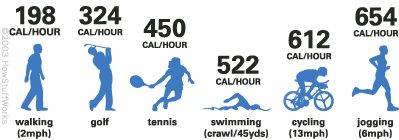
Step five is movement. Exercise doesn’t just burn calories; it expands your budget. Use an online calculator to see how different activities burn energy. Burning an extra 250 to 500 calories a day shifts the equation significantly. It gives you breathing room.
Strategies to Slash Calories
Reducing intake isn’t just about willpower. It’s about strategy.
Journal everything. Carry a small card. Write down every sip and snack. The act of writing it down forces you to pay attention. You can’t hide from the data.
Drop the myths. Forget the trends. Focus on the math.
Eliminate liquid calories. This is the easiest win. Water is free. It fills you up. It has zero calories. Sodas, juices, beer—these are calorie bombs that do nothing for your hunger. Drink 10 ounces of orange juice? You’ve consumed 140 calories. You’re still hungry. Eat the orange instead. You get fewer calories. You do the work of chewing. Your stomach physically fills. The psychological satisfaction of eating a whole fruit curbs appetite in a way juice never can.
This applies to any caloric beverage. The calories pass through you. Your hunger remains unchanged.
Cut white sugar. It’s a trap. Removing it eliminates an entire category of high-calorie junk:
– Cookies
– Cakes
– Ice cream
– Cola
– Candy bars
Say no to added sugar. You instantly clear out the snack aisles.
Drop the fried foods. Deep-frying is just fat absorption.
– Potato chips
– French fries
– Onion rings
– Donuts
– Fried chicken
These items are dense with fat and empty calories. Cut sugar and fried foods together, and you’ve effectively removed most high-calorie junk food from your life.
Swap density for volume. Compare a cookie to a banana. A cookie is high-density. Tiny. Packed with sugar and fat. Two bites give you 100 calories. You’re still thinking about food. A banana is low-density. You have to chew it. You take more bites. You get 100 calories, but you also get fiber, water, and a feeling of fullness. Volume matters. Satiety matters.
Choose the food that makes your stomach feel full, not just your bank account feel lighter.

The Volume Advantage
Think about the math. An apple is tiny in terms of energy density but massive in satisfaction. Try eating six bananas in one sitting. You’d feel swollen, uncomfortable, maybe even sick. It’s roughly 600 calories. Now picture a dozen snack-sized cookies. Same calorie count. You’d finish them without thinking twice.
This is why low-density foods are your secret weapon. They fill the stomach physically without flooding the bloodstream with energy. The goal is volume eating. You want food that takes up space but offers few calories.
Which foods fit this criteria? Stick to nature’s packaging. Any fruit or vegetable in its natural, unprocessed state works. Non-sugared cereals like shredded wheat. Rice cakes. Unbuttered popcorn. Brown rice. Whole-grain bread with high fiber content. These items stretch your stomach lining, triggering satiety signals before you’ve consumed a dangerous amount of energy.
Conversely, high-density foods are the enemy. They pack sugar and fat into small packages. Nuts. Meats. Candy. Crackers. Fried foods. Cola. Beer. Avoid these if you want to stop feeling hungry but never full.
There is a psychological trick to this too. Ditch the baggy sweatpants. Wear form-fitting clothes. Let the fabric remind you, subtly, of your goals. Every time you zip up those jeans, it’s a check-in. A small, consistent nudge toward the result you want.
If you combine this low-density diet with exercise, the math holds. Consume fewer calories than you burn. The result is inevitable: you will lose fat. The weight will stay off.
Making Movement Non-Negotiable
Exercise is the lever that increases your daily burn. You cannot out-diet a sedentary life, but you can offset it. Use online calculators to understand your baseline. They show you exactly how many calories walking, cycling, or lifting burns. Knowledge removes the guesswork.
But knowledge isn’t enough. You need integration. Exercise shouldn’t be an event. It should be part of your infrastructure.
Start with what you enjoy. Or what you can tolerate. Thirty minutes a day. Maybe sixty. Walking. Cycling while watching your favorite show. Gym sessions during lunch hours. Consistency beats intensity when you’re building a habit.
Look for micro-exercises in the cracks of your day. Take the stairs instead of the elevator. Park at the far end of the lot. These small choices accumulate. They add up to significant metabolic shifts over months.
Keep dumbbells at your desk. Lift them while you’re on a call. While you’re thinking. Three or four times a day. It’s not a workout, but it’s movement. It breaks the sedentary cycle.
Find a partner. Social accountability changes everything. It’s easier to skip a workout alone. It’s harder to bail on a friend. The conversation makes the time pass faster. The routine becomes shared.
Do it every day. Habits form through repetition, not sporadic bursts. If you exercise daily, you don’t have to remember to do it. You just do it. The decision is removed from the equation.
The body remembers what you do, not what you say you’ll do. So what will you do tomorrow?
Debunking the Hottest Weight Loss Myths
Let’s cut through the noise. You’ve likely seen the ads. The ones promising you’ll shed fifty pounds without lifting a finger or giving up your morning coffee. They’re everywhere. And they’re wrong.
We need to talk about how calories actually work because the industry has spent decades confusing you. Here is the reality check you need.
Not All Calories Are Created Equal? Actually, They Are.
There is a persistent myth that a calorie from sugar is fundamentally different from a calorie from fat. Thermodynamically? It isn’t.
If you consume 4,000 calories of pure white sugar, your body registers 4,000 calories. If you eat 444 grams of fat, that is also 4,000 calories. The energy value is the same. The source matters for nutrition—vitamins, minerals, satiety—but for the basic math of weight loss, a calorie is a unit of energy. Period.
The Low-Fat Trap
You might think you’re being clever by grabbing the “fat-free” yogurt or the low-fat dressing. Be careful.
Fat adds flavor and texture. When manufacturers remove it, they often replace it with sugar or refined carbohydrates to keep the food palatable. A product can have zero grams of fat and still be calorie-dense. You might end up eating more calories than the full-fat version because the sugar spike leaves you hungry sooner. Don’t let “low-fat” fool you. Check the total calorie count.
Passive Devices Don’t Burn Fat
Look at your wrist. Is there a bracelet there? A ring? Maybe a patch on your back?
These passive devices claim to burn calories through vibration, acupressure, or some other pseudo-scientific mechanism. They don’t work. There is no shortcut. Calories are only burned through metabolic processes and physical movement. If you aren’t moving your body or increasing your heart rate, those gadgets are just expensive jewelry.
The Impossibility of Rapid Weight Loss
Let’s look at the math. It’s cold, hard, and unforgiving.
An advertisement might scream: “I LOST 54 POUNDS IN 6 WEEKS WITHOUT DIETS OR EXERCISE!”
Do the math. To lose 54 pounds of fat, you need to create a deficit of roughly 189,000 calories (54 x 3,500). Spread over six weeks, that’s nearly 3,500 calories a day. To lose 1.3 pounds of fat in a single day, you’d need to burn off 4,500 calories above your baseline.
Unless you are eating nothing AND running a marathon every single day for 42 days, this is impossible. The only people who lose weight that quickly are losing water weight through dehydration or, tragically, undergoing amputation. The ads are lying. Fast weight loss is either fake or dangerous.
The “Enzyme-Driven Fat-Burning Cycle” Scam
From nettle seeds to apple pectin, supplements are pitched as magical cures. They claim to trigger an “enzyme-driven fat-burning cycle that burns calories 24-hours-a-day.”
It doesn’t exist. Enzymes facilitate biological reactions, but they don’t turn your body into a furnace that melts fat while you sleep. If a pill could do that, the pharmaceutical industry would have already reinvented medicine. It’s not real.
The Only Rule That Matters
So, what is true?
You must consume fewer calories than you burn.
This is the fundamental equation. It seems simple, but it’s psychologically complex. You can create this deficit by:
1. Eating less food.
2. Moving more.
3. Doing both.
People are different. Some burn calories faster just by existing. Some have higher metabolisms, just as some people are taller than others. You need to figure out what your body burns in a day. Then, eat slightly less than that number.
It’s not easy. The psychology of food is powerful. We eat for comfort, for habit, for celebration. But once you know the rules of this mental game, you can play it. There is no magic pill. There is no bracelet. There is just the math, and the choice.
Want to dig deeper?
* Ultimate Calorie Burning Quiz
* Weight Loss Quiz
* How Diet Pills Work
* How Calories Work
* How Fat Cells Work
* Does drinking ice water burn calories?
* National Association of Anorexia Nervosa and Associated Disorders (ANAD)
* NIDDK: Statistics Related to Overweight and Obesity