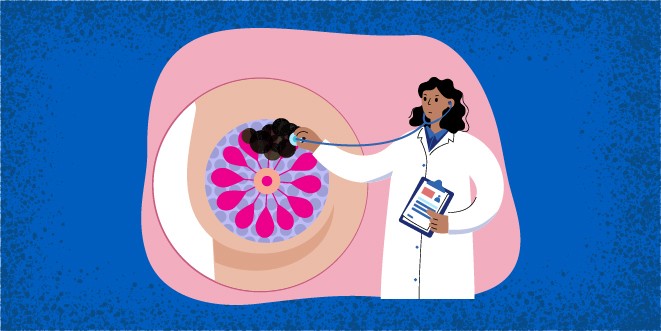
Finding a lump in your breast can be one of the most frightening moments a person experiences. The immediate fear is often cancer, but the reality is more nuanced. While early detection is critical, the vast majority of breast lumps are benign (non-cancerous).
Understanding what these lumps are, how they feel, and how to properly monitor your breast tissue is essential for peace of mind and health. This guide breaks down the science behind breast changes, distinguishes between harmless conditions and serious concerns, and provides a clear protocol for monthly self-exams.
What Is a Breast Lump?
A breast lump is any localized swelling, bump, or mass that feels distinct from the surrounding tissue. These can vary significantly in size (from a pea to larger than a golf ball), texture, and tenderness. They can appear in the breast tissue itself or in the underarm area.
Key Context: The presence of a lump does not automatically mean cancer. Conversely, the absence of a palpable lump does not rule out breast cancer. Some forms of the disease do not present as distinct masses but rather as thickening or skin changes. This duality is why regular self-awareness and clinical screenings (like mammograms for women over 40) are both necessary.
Decoding the Sensation: What Does It Feel Like?
The texture and behavior of a lump often provide clues about its nature. Here is how different types of lumps typically present:
- Firm or Hard: Feels like a solid mass. While cancerous lumps are often hard and irregular, benign lumps can also feel firm.
- Smooth and Moveable: Often round or oval, these lumps can slide slightly under your fingers. This is a common characteristic of fibroadenomas, which are non-cancerous growths.
- Soft or Fluid-Filled: These may feel squishy, similar to a small water balloon. They are frequently tender before menstruation and are typical of breast cysts.
- Tender or Painful: Pain is often linked to hormonal fluctuations, particularly around menstruation. While cancerous lumps are often painless, tenderness does not guarantee a benign cause.
- Fixed in Place: A lump that does not move easily and feels anchored to the surrounding tissue requires immediate medical attention, as this can be a sign of malignancy.
Benign vs. Malignant: Understanding the Types
To make sense of breast health, it helps to categorize lumps into two groups: benign (non-cancerous) and malignant (cancerous).
Common Benign Conditions
Most breast lumps fall into this category. They are generally not life-threatening but may require monitoring or treatment for comfort.
- Fibroadenoma: Common in women in their 20s and 30s. These are rubbery, painless, and move freely. They can vary in size and appear anywhere in the breast tissue.
- Fibrocystic Changes: Often affecting women with dense breasts, this condition causes natural hormonal fluctuations during menstruation. Breasts may feel lumpy, swollen, and sore before a period.
- Breast Cysts: Fluid-filled sacs that are smooth, round, and moveable. They can change size with the menstrual cycle and may be tender.
- Fat Necrosis: Scar tissue formed from injured breast fat, often due to trauma, surgery, or radiation. It feels like a firm, round lump and can sometimes mimic cancer on imaging tests.
- Lipoma: A slow-growing mass of fat cells. These are soft, painless, and move easily under the skin.
- Breast Abscess: A pocket of pus caused by bacterial infection, often associated with breastfeeding. Symptoms include a painful lump, redness, swelling, and fever.
- Intraductal Papilloma: A small, wart-like growth inside a milk duct near the nipple. It is often harmless but can cause nipple discharge.
Malignant Conditions (Breast Cancer)
Cancerous lumps result from abnormal, uncontrolled cell growth. Unlike benign lumps, they can invade surrounding tissue and spread (metastasize) to other parts of the body.
- Invasive Ductal Carcinoma (IDC): The most common type of breast cancer. It begins in the milk ducts and spreads to surrounding tissue. Signs include a hard, irregular lump, skin dimpling, or nipple inversion.
- Invasive Lobular Carcinoma (ILC): The second most common type, starting in the milk-producing lobules. It may not form a distinct lump but rather presents as thickening, fullness, or subtle changes in breast shape.
- Ductal Carcinoma in Situ (DCIS): Considered “stage 0” breast cancer. Abnormal cells are confined to the milk ducts and have not invaded surrounding tissue. It may present with nipple discharge but often has no palpable lump.
- Inflammatory Breast Cancer: A rare, aggressive form where cancer cells block lymph vessels in the breast skin. Symptoms include redness, swelling, warmth, and skin resembling an orange peel (peau d’orange ). A distinct lump is often absent.
- Paget Disease of the Breast: A rare cancer affecting the nipple and areola. Symptoms include red, flaky skin, burning, itching, and potentially an underlying lump.
- Receptor-Defined Cancers:
- Triple-Negative: Lacks estrogen, progesterone, and HER2 receptors.
- HER2-Positive: High levels of HER2 protein, which promotes rapid cell growth.
How to Perform a Breast Self-Exam (BSE)
Monthly self-exams are not a substitute for professional screening, but they are a powerful tool for knowing your normal. If you know what your breasts usually look and feel like, you are better equipped to notice changes early.
Step 1: Visual Inspection
Stand undressed from the waist up in front of a mirror.
* Arms Relaxed: Look for changes in size, shape, swelling, skin dimpling (orange peel texture), redness, rashes, nipple inversion, or unusual discharge.
* Arms Overhead: Raise your arms and repeat the inspection.
* Hands on Hips: Press firmly on your hips to flex your chest muscles and check for further changes.
Step 2: Physical Palpation
Lie down and place a pillow under your right shoulder. Put your right arm behind your head. Use the pads of your three middle fingers on your left hand to examine the right breast.
Choose One Pattern:
* Circular: Small circles moving from the outer breast toward the nipple.
* Vertical Lines: Up-and-down strips covering the entire area.
* Wedge Pattern: From the outer breast toward the nipple and back out (like pie slices).
Apply Three Levels of Pressure:
1. Light: For tissue just beneath the skin.
2. Medium: For the middle tissue layer.
3. Firm: For deep tissue near the ribs.
Coverage Area: Ensure you check the entire breast, the underarm area, the area up to the collarbone, and down to the bra line. Repeat on the other side.
When to Perform Your Exam
- If menstruating: 3–5 days after your period ends (when breasts are least tender and swollen).
- If not menstruating: Choose the same day each month.
- If pregnant, breastfeeding, or postmenopausal: Pick a consistent monthly date.
Conclusion
Breast health is a balance of awareness and action. While finding a lump can be alarming, remember that most lumps are benign. However, because some cancers do not present as distinct lumps, regular self-exams combined with annual mammograms (for those over 40) provide the best defense. Knowing your body’s normal state allows you to detect abnormalities early, potentially saving your life.