Your skin feels like it stretches too far. Your joints click, pop, or lock without warning. Maybe you’re the most flexible person in the room, yet you feel exhausted after walking to the mailbox. You aren’t imagining it. You likely have joint hypermobility, a condition where joints bend beyond the typical range of motion.
It affects 10 to 30 percent of the population. For some, life is easy. For others, it is a constant battle. The spectrum runs from mild laxity to complex diagnoses like hypermobile Ehlers-Danlos Syndrome (hEDS ) or hypermobility spectrum disorders (HSDs ). These conditions don’t just affect the joints. They impact the entire body.
Doctors identify several key signs. Look for unstable joints. Look for chronic pain that scans can’t explain. Look for fatigue that sleep doesn’t fix.
Why Joints Feel Loose and Unstable
Recurrent sprains. Strains. The terrifying feeling that your knee will buckle under you. These are hallmarks of hypermobility. Connective tissue holds joints together. In hypermobile people, this tissue is loose. Muscles must work overtime to stabilize them. This wears you out.
“Muscles around it have to work overtime to compensate,” explains Dr. Jacques Courseault, a physiatrist at Tulane University.
This instability leads to subluxations. Bones partially slip out of place. Ligaments fail to keep alignment. Dr. Vivek Babaria describes the sensation vividly. You might feel a joint go out, then slide back in. Sharp pain follows. Swelling may linger.
The shoulder is the most common site. But knees? Fingers? Jaw? Ankles? They all suffer. Full dislocations happen. But partial subluxations are far more common.
The Mystery of Joint Pain
Joint pain is universal in these patients. Loose joints strain muscles. They strain nerves. Chronic pain results. Here is the frustration: medical imaging often comes back normal. MRI scans show nothing wrong with the bone or the joint capsule.
But the pain is real. Standard imaging doesn’t capture the supporting structures. The muscles and fascia are doing the stabilizing work. They are overworked and inflamed. Courseault points out this gap in visibility. Imaging sees bone and ligament. It misses the muscular effort required to hold you together.
Anxiety and the Autonomic Nervous System
Anxiety rates are significantly higher in hypermobile populations than the general public. Dr. Linda Bluestein notes it manifests as generalized anxiety, panic attacks, or social anxiety. You may feel perpetually on edge.
Why? Research suggests differences in autonomic nervous system regulation. Interoception—the brain’s ability to read internal signals—is often skewed. When your body sends rapid-fire signals of dizziness, nausea, or pain, the brain interprets them as threats.
“Brain may interpret those sensations as contributing to anxiety symptoms,” Bluestein says.
Chronic pain and fatigue exacerbate this. Being dismissed by healthcare providers doesn’t help either. The trauma of invalidation compounds the physiological response.
Fatigue That Sleep Doesn’t Fix
Fatigue here is profound. It isn’t just needing a nap. It is exhaustion that interferes with work, relationships, and daily functioning. Several factors combine to create this drain.
Sleep disorders like apnea and insomnia are common. Autonomic dysfunction leaves you drained after minor exertion. Chronic pain disrupts sleep quality. Poor sleep lowers pain thresholds. The cycle repeats.
Plus, biomechanics play a role. You use more muscular energy to stabilize loose joints. Routine tasks require more effort than they would for a rigid-jointed person. Your body burns fuel differently.
Skin Changes: Stretchy, Soft, Fragile
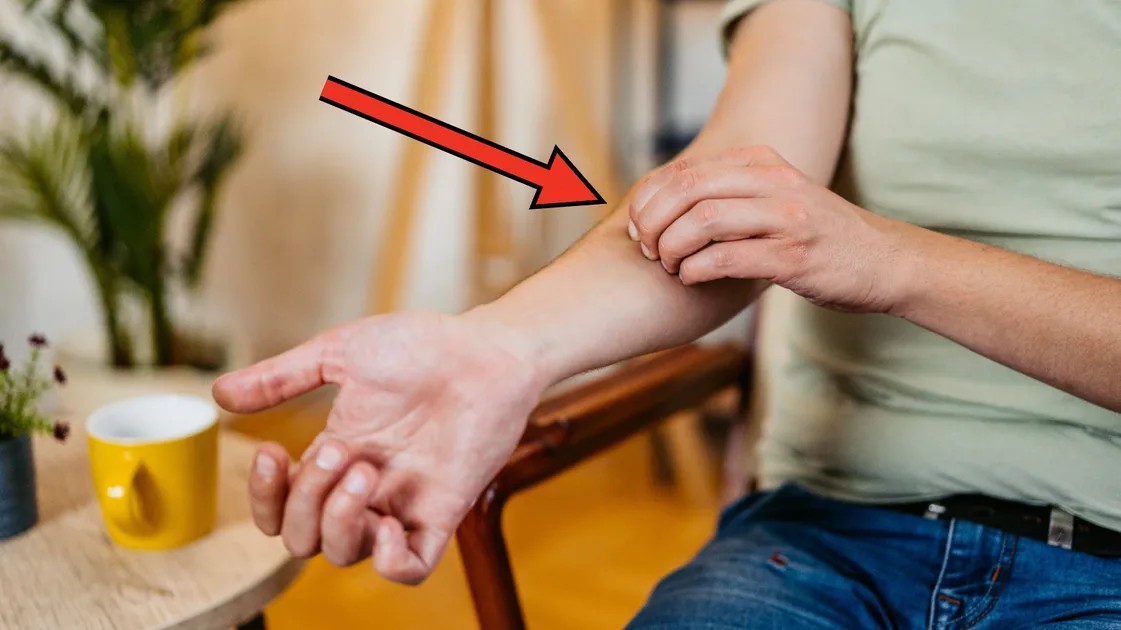
Check your skin. Is it soft, silky, velvety? Does it stretch further than normal? It may bruise easily. Fragility is a key trait.
Some people develop atrophic scarring. These scars are thin. They look like cigarette paper. They sunken into the skin. These changes relate to collagen structure and protein regulation. If your skin lacks structural integrity, your joints likely do too.
A Racing Heart: Dysautonomia and POTS
Some patients experience dysautonomia. The autonomic nervous system controls involuntary functions: heart rate, breathing, digestion. When it malfunctions, symptoms cascade.
Dizziness. Lightheadedness. Palpitations. Brain fog. Temperature dysregulation. Excessive sweating.
The heart is often the primary victim. “Heart rate often accelerates without reason,” notes Dr. Harris. It typically spikes upon standing. This points to Postural Orthostatic Tachycardia Syndrome (POTS ).
Veins in the legs fail to constrict normally. Blood pools in the abdomen or lower limbs. The heart senses low blood volume. It races to compensate. The brain gets less oxygen during this struggle. Hence, the fog. The dizziness. The feeling of faintness.
Is It a Gift or a Burden?
Hypermobility isn’t inherently bad. It offers advantages. Strength training helps. When you strengthen the muscles around unstable joints, symptoms often improve.
Consider the athletes. The world’s best gymnasts, divers, and dancers are frequently hypermobile. They gravitate toward fields where flexibility is an asset. Yoga, Pilates, dance—these disciplines leverage the condition rather than fighting it.
The key is managing the instability. Understanding the symptoms. Recognizing that the pain, the anxiety, the fatigue, and the skin changes are linked. It is one system. One spectrum.
If you recognize yourself in these descriptions, it isn’t just “being double-jointed.” It is a physiological reality. And for many, with the right care and adaptation, it is a life that can be lived fully. Even if the joints sometimes decide to take a detour.