Let’s be real. Dieting isn’t just a hobby in America. It’s a lifestyle. You walk into a grocery store or scroll through social media, and almost everyone is talking about counting calories or trying the next big name on the menu. Atkins. Cabbage Soup. Grapefruit. South Beach. You’ve heard them all. They pop up, they fade, and then they’re back again.
But before you jump on the next bandwagon, you need to understand why gaining weight feels so damn easy. And more importantly, why maintaining it is a battle you’re fighting against your own biology.
The Human Machine’s Dangerous Efficiency
Why does weight creep up as we hit our thirties? Why does it feel like no matter what you do, the number on the scale nudges upward?
It’s not just willpower. It’s efficiency. Your body is an incredibly frugal machine. It doesn’t want to waste energy. In fact, it fights hard to keep every spare calorie stored away for a rainy day that might never come.
Consider your resting metabolic rate. When you’re sitting on the couch, binge-watching a series, your body is still working overtime. It’s pumping blood, firing neurons, and keeping your organs running. But here’s the catch: it uses very little fuel to do it. Roughly 12 calories per pound of body weight per day.
So if you weigh 150 pounds, your body burns about 1,800 calories just to keep you alive. That’s it. No movement. No stress. Just existence.
Those 1,800 calories are doing heavy lifting though:
- Keeping your heart beating
- Regulating your body temperature
- Fueling your brain
- Maintaining your internal organs
It sounds like a lot. But compare that to the energy required to move.
How Many Calories Do You Actually Burn?
Let’s look at motion. Specifically, running.
If you’re a serious runner, you might think you’re torching thousands of calories every time you lace up your shoes. You’re not.
A person running a marathon (26 miles or 42 km) burns only about 2,600 calories total. That breaks down to roughly 100 calories per mile. Or about 62 calories per kilometer.
Think about that. You can run 26 miles and still burn fewer calories than a large slice of pepperoni pizza.
The Gasoline Comparison
To really grasp how efficient the human body is, let’s compare us to cars.
A typical American car gets between 15 and 30 miles per gallon of gas. One gallon of gasoline contains about 31,000 calories. If humans could drink gasoline instead of eating hamburgers, we’d be the most fuel-efficient vehicles on the road.
Here’s the math:
A human could run 26 miles on just one-twelfth of a gallon of gas (0.3 liters). That equals over 300 miles per gallon.
If you get on a bicycle, that efficiency skyrockets. You can achieve well over 1,000 miles per gallon.
Your body is a hybrid engine designed to go the distance with minimal input. This extreme efficiency is exactly why gaining weight is so easy. The barrier to entry for storing fat is incredibly low.
Taking Calories In
Since your body is so good at running on fumes, the equation for weight gain becomes simple. It’s not about moving more. It’s about what goes in. And that brings us to the other side of the calorie equation.
The Calorie Shock of a Single Fast Food Order
Let’s be honest. The idea that your body runs on 1,800 calories a day sounds manageable until you actually look at what modern convenience food delivers in one sitting. It’s not just a number on a label. It’s a reality check.
Take a trip to your local McDonald’s. Order the Big Xtra meal. You’re getting a sandwich, large fries, and a large Coke. The math is brutal but straightforward. The sandwich alone packs 710 calories. The fries? 540. That soda adds another 310.
That is 1,560 calories.
Just one meal.
If you have the discipline to skip dessert, you still have 240 calories left for the rest of the day. Breakfast, lunch, snacks, dinner—you need to budget them carefully. But let’s say you don’t. Let’s say you add an M&M McFlurry. That’s 630 more calories. Suddenly, you’re at 2,200 calories before you’ve even left the parking lot. You’ve already exceeded the daily limit for most adults at rest.
It’s not just McDonald’s. It’s everywhere.
Head over to Pizza Hut. Grab a Meat Lover’s Pan Pizza. Each slice is 360 calories. Eat three slices. Add a large drink. You’re looking at 1,390 calories. You are 410 calories away from hitting your full daily quota. And you haven’t eaten breakfast yet.
This isn’t about guilt. It’s about awareness.
Just one meal can consume nearly your entire daily energy allowance.
The portion sizes have shifted. The calorie density has skyrocketed. What used to be a treat is now a standard lunch. When you understand how quickly these numbers add up, you might start questioning the “standard” meal.
Maybe you swap the large fries for a side salad. Maybe you choose water over soda. Maybe you share the pizza. These aren’t drastic changes. They’re small adjustments. But they add up.
The next time you’re hungry and the drive-thru is tempting, remember the 1,800 mark. Ask yourself if this meal fits into your day or if it breaks it. The choice is yours.
The Calorie Trap: How Easy It Is to Gain Weight
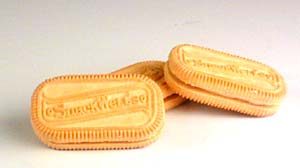
It takes almost no willpower to overeat. Consider SnackWell’s Crème Sandwich Cookies. If you eat just 12 of them—which, let’s be honest, is barely a handful—you’ve consumed 660 calories. That is more than a third of a standard daily limit.
This isn’t about shaming specific brands. I have two kids. We hit McDonald’s at least once a week. The reality is simpler and more pervasive: in the US and other developed nations, calories are everywhere. They are cheap, convenient, and relentless.
Consider a “normal” day for someone who is overworked and under time. Breakfast? Two Pop-Tarts. Lunch? Pizza from the delivery chain. Afternoon snack? Those same cookies and a cola. Dinner? Fast food. Evening? Potato chips while scrolling on the couch.
You haven’t tried to overeat. You’ve just lived your life. Yet, the calorie count hits 3,000, 4,000, or even 5,000. Easy. Effortless.
Your body is a fortress. It is designed to capture excess energy and store it as fat for a “rainy day” that never seems to come. The math is brutal in its simplicity. It takes 3,500 excess calories to create one pound of new body fat. If you eat just 500 calories above your daily need, you gain a pound every week. 500 calories is nothing. It’s one ice cream cone. A few cookies. In a world where food is this accessible, gaining weight requires zero effort.
How Calorie Deficits Actually Work
Let’s say you are carrying extra weight and want to lose a few pounds. The mechanism is straightforward: to lose one pound of fat, you must burn off 3,500 calories over time. You need a deficit.
Assume you weigh 150 pounds. Your body burns roughly 1,800 calories a day just to keep the lights on (150 lbs x 12). Here is how you create that gap:
- Starvation Mode: You lie in bed and eat nothing. You burn 1,800 calories. You take in zero. That’s a 1,800-calorie deficit daily. You lose a pound roughly every two days. (Highly impractical and unhealthy, but mathematically true).
- Dieting: You eat 1,500 calories a day instead of your 1,800 need. That’s a 300-calorie daily deficit. You lose one pound every 12 days. (12 days x 300 = 3,600).
- Exercise: You eat 1,800 calories (your maintenance level) but jog two miles daily. That run burns about 200 calories. Over 18 days, you’ve burned enough to lose a pound.
- The Extreme: You eat 2,500 calories but run ten miles a day. You burn 1,800 at rest + 1,000 running = 2,800 total. You consume 300 less than you burn. Same result as simple dieting: one pound lost every 12 days.
The bottom line is non-negotiable. To lose fat, you must consume fewer calories per day than your body needs. You can achieve this by eating less, moving more, or doing both. Most diets, from Weight Watchers to grapefruit fads, are just clever systems to help you lower that daily intake number. That is all they do.
Why Most Diets Fail to Last
The reason diets don’t work long-term is their lack of sustainability. Weight gain happens because you eat more than you burn. A diet creates a temporary deficit. When the diet ends, you return to your old habits, and the weight returns.
Let’s look at the slow creep. Imagine you weigh 150 pounds. Your resting burn is 1,800 calories. Add in daily movement—walking stairs, carrying groceries—and your total need is about 2,000 calories per day.
Now, assume you eat 2,050 calories daily. You are only 50 calories over your limit. But your body stores that excess. It takes 3,500 calories to make a pound. 50 calories a day means you gain one pound every 70 days (3,500 / 50).
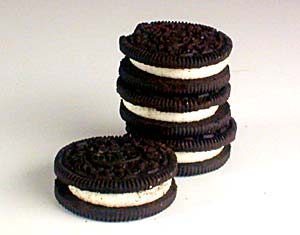
Over a year, that small 50-calorie surplus adds up to 5 pounds. This is the pattern for a huge portion of the population. We don’t need to binge to gain weight. We just need to over-consume by a tiny margin, day after day. Keep in mind that a single Oreo-type cookie is roughly 50 calories. It is incredibly easy to stay in that surplus zone without even noticing.
The Crash Course in Calorie Math
Let’s run the numbers on the “Get Slim Miracle Diet.” The rules are simple: two cups of brown rice, one can of Vienna sausages, and as many onions as you want. That’s it. For two months. You’re locking yourself into roughly 1,000 calories a day.
Now, add movement. You go for a two-mile jog every single day. Your body isn’t just burning off food; it’s digging into reserves. You are creating a deficit of about 1,200 calories below your maintenance level on a typical day.
The math is brutal but clear. It takes roughly 3,500 calories to burn one pound of fat. Divide that by your daily deficit. In about three days, you lose a pound. You stick to the regimen for two months. The scale drops twenty pounds.
It feels like magic. It isn’t.
The Rebound Effect
So, what happens on day sixty-one when you finally put down the Vienna sausages?
You eat. A lot. Your body, starved for variety and volume for eight weeks, doesn’t gently ease back into normalcy. It binge. You revert to your old eating habits—the ones you had before the diet. And because your metabolism is likely slowed from the low-calorie crash, and because you’ve regained all the lost weight (plus some) once normal calories return, the result is predictable.
You gain it back. All of it.
This is the fundamental flaw of most crash diets. They work in the short term. They fail in the long term because they aren’t lifestyles. They are punishments with a deadline. You lose weight. You stop the punishment. The weight returns. It’s a cycle that leaves you heavier and more frustrated than when you started.
Building a Sustainable Diet
The alternative isn’t a stricter plan. It’s a better one. What you actually need is a sustainable approach to food and movement. This means a plan that allows you to:
- Eat real foods without counting every grain of rice.
- Enjoy social events without guilt.
- Move your body because it feels good, not because you’re burning off sausages.
A sustainable diet isn’t about restriction. It’s about consistency. It’s about building habits that fit into your actual life, not one that requires you to live in a vacuum. If you can’t see yourself doing it for the next ten years, it’s not a diet. It’s a detour.
A diet is only as good as its ability to survive reality.
Stop looking for miracles. Start looking for maintenance. The goal isn’t to lose twenty pounds in two months. The goal is to keep them off for twenty years. That requires a different kind of math. One that adds up to a life, not just a number on a scale.
Why counting calories feels impossible (and how to fix it)
You want the weight to stay off. You want the energy to stay up. But the modern food landscape is a minefield of hidden calories, and exercise is a time suck that drains the very energy you’re trying to burn. It’s exhausting.
The first step to breaking the cycle is brutal in its simplicity: start counting. You need to know exactly what a “normal” day looks like for you. Not the good days. Not the days you’re on vacation. The real days. You need to build a mental database of calories so that when you pick up an apple or a bagel, you instinctively know the cost.
In the US, grocery store items have labels. Chain restaurants provide stats online or in-store. Use them. Stop guessing.
The math of maintenance
Next, figure out your baseline. The quick rule is 12 calories per pound of your ideal weight. Want more precision? Dig into the formulas. Pick the number on the scale you actually want to hold. Calculate what it costs to stay there.
Then, compare.
Compare what you should eat to what you actually ate yesterday. The gap between those two numbers is where the extra weight hides. It’s usually larger than you think.
Closing the gap
If the math says 1,600 calories is your limit, believe it. It’s not that many. You have to watch everything. Every sip. Every crumb.
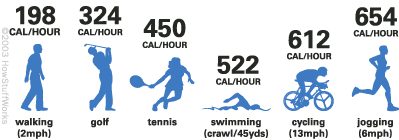
This is where exercise comes in—not as punishment, but as leverage. If you burn an extra 250 to 500 calories a day through movement, your budget expands. You can eat slightly more without gaining. Use an online calculator to see how your specific workouts shift the needle. It makes the deficit feel less like a prison sentence and more like a trade-off.
Cutting the noise
Reducing intake isn’t just about willpower. It’s about strategy.
Keep a daily journal. Stuck an index card in your pocket. Write down everything. If it isn’t written down, it didn’t happen. This kills the “I didn’t eat that much” illusion.
And you need to kill the myths. Stop believing in magic foods. Focus on the mechanics.
The liquid calorie trap
Eliminate calories that come in liquid form. Drink water.
Cola. Orange juice. Beer. They are calorie bombs with zero satiety. Drink 10 ounces of OJ (300 ml) and you’re down 140 calories. Your stomach doesn’t know. Your appetite doesn’t care.
Eat the orange instead.
Three things happen:
1. Fewer calories overall.
2. The act of chewing triggers a psychological satisfaction.
3. The fiber fills your stomach. You feel full. Juice doesn’t.
This applies to any caloric beverage. The calories enter, but the hunger signals stay loud.
Sugar and oil are the enemies of fullness
Cut white sugar. It’s an easy win. No cookies. No cake. No ice cream. No candy bars. You’re not just cutting sugar; you’re eliminating entire categories of high-calorie snacks.
Do the same for fried foods. Potato chips. Cheese crisps. French fries. Onion rings. Donuts. Fried chicken.
Deep frying packs fat—and therefore calories—into tiny spaces. A handful of chips is a calorie sink. Eliminate sugar and fried foods, and you’ve wiped out half the junk in your grocery aisles.
Density matters
Swap high-density foods for low-density ones.
A cookie is high-density. Sugar and fat compressed into one bite. One or two bites equal 50 to 100 calories. It’s easy to eat them while distracted.
A banana is low-density. You have to work for it. It takes many bites to get through, yet you only ingest about 100 calories. The volume is higher. The effort is higher. The satisfaction is real.
You don’t need to eat less food. You need to eat food that fights back.

Eating six bananas in one sitting is physically impossible. It feels like an act of self-harm. Yet, you could likely polish off a dozen cookies without breaking a sweat. That dozen of cookies clocks in at 600 calories. So do the six bananas.
The difference isn’t just volume. It’s density.
This is the core of low-density foods. They pack volume without packing the caloric punch. You fill your stomach. Your brain registers fullness. You don’t feel like you’re starving ten minutes later.
Look for foods that take up space in your gut but provide minimal energy. These include:
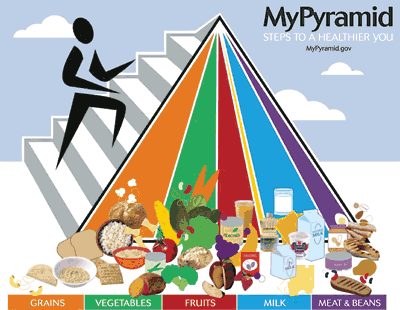
- Natural fruits and vegetables (the closer to nature, the better)
- Non-sugared cereals like shredded wheat
- Rice cakes
- Plain, unbuttered popcorn
- High-fiber whole-grain bread
- Brown rice
Avoid the opposite. High-density foods are calorie bombs. Think nuts, fatty meats, candy, cookies, crackers, chips, fried items, cola, and beer. They slide down easily. They sneak in calories. You don’t even notice until it’s too late.
There is also a psychological trick that works for many. Swap your baggy sweatpants for form-fitting clothes. Tighter fabric acts as a subtle, constant reminder of your goals. It’s a physical check-in. If you’re gaining, the clothes tighten. You notice. You adjust. If you’re losing, it’s a reward.
Follow this logic. Keep your intake below what you burn. The result is predictable. You lose fat. You hold your weight steady.
How to integrate exercise into a busy day
Exercise isn’t just about burning calories. It’s about creating a deficit. The more you move, the more room you have to eat. But let’s be real. You don’t have two hours for the gym.
You need to fit movement into the cracks of your day. Online calculators can show you how many calories specific activities burn, but the math matters less than the habit.
Start with what you can tolerate. You don’t need to love it. You just need to do it. Thirty minutes a day. Sixty if you can manage. Walk. Ride a stationary bike while watching your show. Hit the gym during lunch. Consistency beats intensity when you’re starting out.
Look for micro-exercises. These are the invisible calories burners.
- Take the stairs instead of the elevator.
- Park at the far end of the parking lot.
- Do calf raises while brushing your teeth.
It seems trivial. It adds up. Small movements accumulate into significant energy expenditure over weeks.
Keep dumbbells near your desk. Use them while you’re on phone calls. Lift. Put down. Repeat. Three or four times a day. It’s not a workout. It’s just movement.
Find a partner. For many people, exercising alone is a chore. Having someone to text, call, or meet with turns it into a social contract. You show up because someone is waiting. It creates structure.
Try to exercise every day. Habits stick when they are daily. If you skip days, you break the chain. Make it automatic. Like brushing your teeth. Like checking your email.
Your body adapts. It gets efficient. It wants to conserve energy. That’s why you have to keep moving. Not for the aesthetic. Not for the number on the scale. But for the mechanics of staying alive and feeling good.
The coffee is still warm. The day is still long. What are you going to do with it?
The Calorie Math That Actually Works
Let’s cut through the noise. There is a staggering amount of misinformation circulating about how to lose weight, and it’s designed to keep you confused, buying products, and cycling through frustration. Understanding the difference between marketing hype and biological reality is the first step toward actually seeing results.
Calories In, Calories Out (It’s Not Complicated)
The foundational truth of weight loss is simple, even if executing it is hard. You must consume fewer calories than your body expends. Period.
This doesn’t mean you need to starve yourself, but it does mean you need to understand energy balance. Some people naturally burn more calories at rest than others. It’s no different than height or hair loss rates—we are all biologically distinct. The key is determining your specific daily burn and eating below that number.
But here is where the myths creep in to sabotage your progress.
The “Calorie Quality” Trap
One of the most persistent lies is that some calories are “better” or “different” than others in a way that defies physics.
A calorie is a unit of energy. If you eat 4,000 calories from white sugar, your body registers 4,000 units of energy. If you eat 4,000 calories from fat, it still registers 4,000 units. The source matters for nutrition, yes, but for raw energy balance, the math is neutral. Ignoring this leads people to overconsume “healthy” fats or sugars thinking the body will handle them differently. It won’t.
The Low-Fat Illusion
You’ve seen them on the shelves. Products labeled “fat-free” or “low-fat.” They promise you can eat as much as you want because the fat is gone.
Don’t be fooled.
When manufacturers remove fat, they often replace it with sugar, starch, or other caloric dense additives to maintain texture and taste. A product with zero grams of fat can still have a massive calorie count. In many cases, these processed alternatives have just as many, or even more, calories than the full-fat original. You end up eating more sugar while thinking you’re being smart. That is a quick path to gaining weight, not losing it.
Passive Devices Don’t Burn Fat
Look around your bathroom or bedroom. Are there acupressure rings? Bracelets? Weight-loss soaps? Patches?
These devices are optical illusions for your wallet. There is no passive mechanism that burns fat for you. Calories are burned through metabolic processes and physical movement. You cannot buy a shortcut that bypasses the biological requirement of energy expenditure. If a product claims to burn fat while you sleep or sit still, it is lying.
The Danger of Extreme Claims
You’ve seen the headlines. “Lose 10 pounds this weekend!” or “I lost 54 pounds in 6 weeks without diet or exercise!”
Stop scrolling. These are not just exaggerations; they are biologically impossible for fat loss.
To lose one pound of actual body fat, you must create a deficit of roughly 3,500 calories. Let’s break down that insane 54-pound claim. Losing 54 pounds in six weeks requires losing 9 pounds every seven days. That is 1.3 pounds of fat loss per day.
1.3 pounds of fat equals approximately 4,500 calories.
To achieve this, you would need to burn 4,500 calories every single day above your baseline, while eating absolutely nothing. The only way to burn 4,500 calories of exercise daily is to run a marathon (26.2 miles) every day for 42 days. You would not survive. The only way to lose weight that rapidly is through severe dehydration or amputation. The ads are lying to exploit your desperation.
The “Enzyme-Driven Fat Burning” Scam
Then there are the supplements. Nettle seeds. Apple pectin. Various herbal blends. They all promise an “enzyme-driven fat-burning cycle that burns calories 24 hours a day.”
No.
Your body is a complex system, not a machine that can be tricked by a single ingredient into melting fat while you lounge on the couch. While digestion does require energy (thermic effect of food), no natural compound creates a magical, round-the-clock fat-burning engine that overrides caloric intake.
The Mental Game
So, what is true?
You have to eat fewer calories than you burn. You can do this by reducing intake, increasing movement, or a combination of both.
Is it easy? No. The psychology of food is powerful. We eat for comfort, for celebration, for habit. We are not robots. But the rules of the game are fixed. You cannot cheat physics. You must find your number. You must live below it.
It is a mental discipline. Once you accept that there are no magic pills, no passive bracelets, and no miracle cycles, you can focus on what actually works: consistent, sustainable effort.
Resources for Further Reading
If you want to dig deeper into the mechanics of weight management and health, these resources provide more detailed scientific contexts:
- Understanding Energy: How Calories Work, How Fat Cells Work, How Fats Work, How Food Works.
- Mechanics of Loss: How Diet Pills Work, How Exercise Works, How do I burn calories on a stair machine?, Does drinking ice water burn calories?
- Assessment Tools: Ultimate Calorie Burning Quiz, Weight Loss Quiz, How can a diet pill make you feel full?