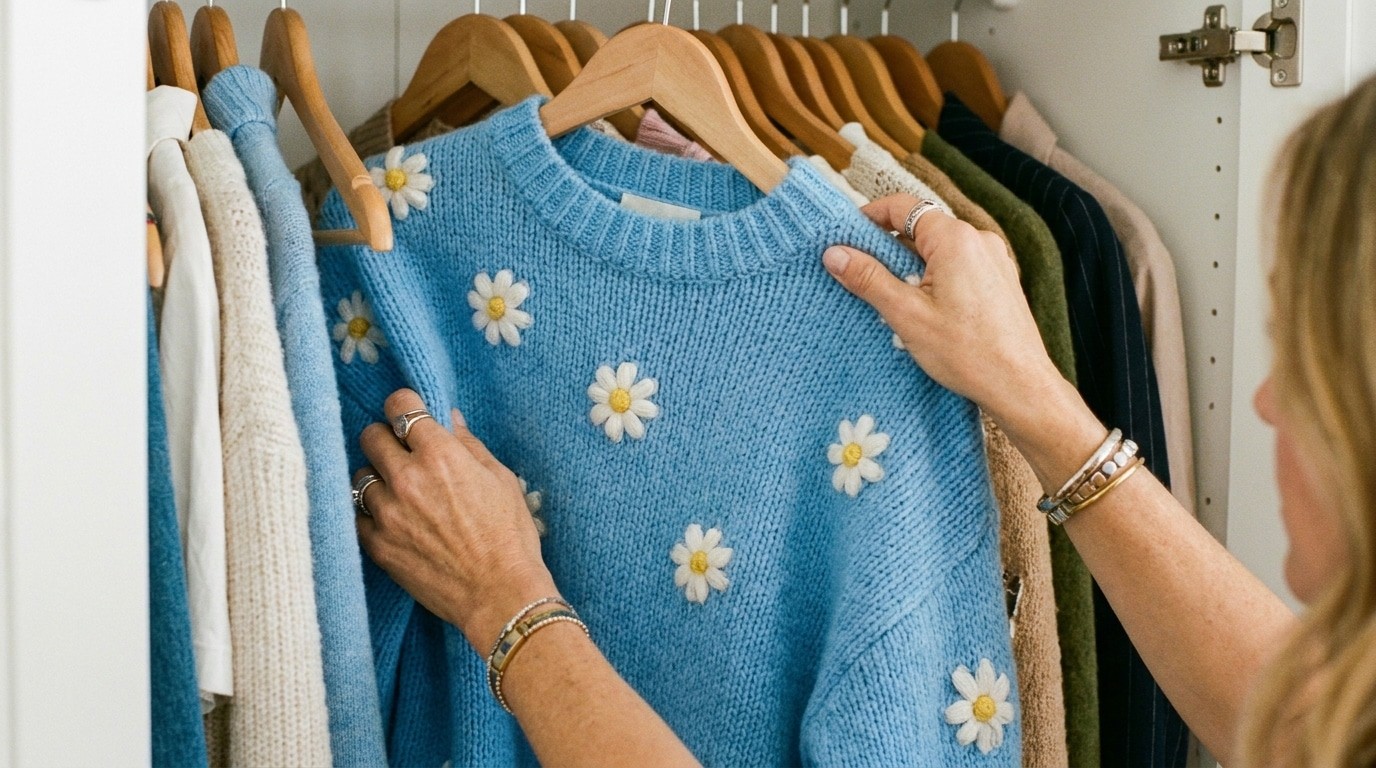
You know that panic. You yank open the closet door and brace yourself for an avalanche of denim and cotton. The shelves look tidy for exactly three days. Then, it looks like a battlefield. This chaos makes choosing an outfit a morning nightmare, especially when spring weather is playing games with the thermostat.
What if the answer wasn’t better folding? What if it was just… not folding?
Traditional stacking is exhausting. It’s time to treat those classic stripes and summer linens with a zero-waste mindset. Rationalize your space. Stop the stacking.
Why Classic Folding Fails You
Shelves look great in catalogs. A flat t-shirt seems to take up minimal room. That’s an illusion. Reality hits fast.
Try to grab that favorite tee from the bottom of the pile. The whole tower collapses. It hits the floor. It’s frustrating. It’s inefficient.
The morning search for the perfect sweater ends in disappointment. Wrinkles form instantly. Creases along the sleeves mean you need to iron. You’re stressed before your coffee kicks in. You’re wasting time you don’t have.
The Spring Purge: Before You Reorganize
You can’t build a system on top of chaos. Start by emptying the room.
Pull everything out. Everything. Put it all on your bed. This isn’t just cleaning; it’s a mental reset. You see exactly how much you’ve accumulated. You see the weight of time and habit.
The Gentle Art of Letting Go
Keep only what you actually wore last year. If you haven’t touched it, it’s taking up space that doesn’t belong to it.
Donate the relics. Support solidarity associations. Give your clothes a second life. This isn’t just decluttering. It’s environmental protection. It costs zero budget. It clears the air.
“Vide l’intégralité de vos tiroirs sur le lit.”
Start with the bed. Look at the mountain. Decide what stays. The folding will follow. Or won’t. Either way, you breathe easier.
Why hanging clothes stops the morning panic
There is a distinct mental shift that happens when you stop stuffing garments into drawers. Pulling every item out and putting it on a hanger turns that dark, forgotten corner of your closet into a bright, accessible showroom. It isn’t just about aesthetics. It is about clarity.
You see everything.
This visual access changes how you dress. Instead of digging through piles, you spot combinations you hadn’t considered. The right jacket matches the shirt you forgot existed. The tension of the morning rush dissolves because the options are right in front of you, not hidden away.
The natural de-wrinkle trick you’re ignoring
Here is the thing about gravity: it works for you if you let it.
When you hang clothes, the weight of the fabric pulls gently against itself. Air circulates between the fibers. This simple physics lesson acts as a natural steamer. You might find yourself skipping the iron entirely for those blouses and trousers that have been hanging for a day or two. The drape stays crisp. The effort drops to zero.
Ditch the wire hangers (they are ruining your clothes)
If you are still using the thin wire hangers from the dry cleaner, stop. Immediately.
Those flimsy metal shapes are stretching out the shoulders of your favorite blazers and leaving permanent bumps on delicate knits. They offer no support. They are basically the enemy of structure.
Switch to velvet-covered non-slip hangers or smooth, contoured wooden hangers. They grip the fabric without marking it. They hold the shape of the garment rather than fighting against it. It feels luxurious to touch. It looks expensive to see.
The uniformity hack for a high-end look
There is a reason boutique windows look so inviting. It isn’t just the clothes. It’s the hangers.
When every item hangs on the identical, sleek hanger, the visual noise disappears. Your eye doesn’t trip over mismatched colors or shapes. The uniformity creates a sense of calm. It makes your closet look curated, not chaotic. This small detail elevates the entire space from “storage” to “showcase.”
Organize by function, then by color
Once you have the right hangers, you need a system. Randomly hanging clothes based on what was easiest to grab last week leads to disaster.
Start by grouping items into families.
– Tailored pants together.
– Silk blouses together.
– Denim together.
This categorization creates zones. You know exactly where to look for a work outfit versus a weekend look. It turns your closet into a functional tool rather than a junk drawer.
Then, apply the gradient.
Within each category, arrange items from light to dark. Pale blues on the left, navy on the right. Black at the end. This chromatic sorting is surprisingly satisfying. It makes picking out a spring look feel like a game rather than a chore. Your eye glides across the spectrum. It brings a sense of order that feels good to sit with.
Maintenance is just seconds a day
The real magic of this method isn’t the initial setup. It is the sustainability.
When every item has a designated “home” on the rail, putting things back becomes instinctive. You don’t have to think about where the cardigan goes. It goes next to the other knitwear, in the middle shade of gray. The friction of returning clothes is removed.
You spend seconds, not minutes, maintaining the system.
This approach protects your fabrics, too. Hanging allows fibers to breathe and recover their shape. You wear your clothes longer because you respect them more. The pile of unworn, wrinkled clothes that used to stress you out is gone.
In its place is a space that feels airy, intentional, and ready for whatever you throw at it. Is it worth re-hanging your entire wardrobe this summer? The answer lies in the peace of mind when you wake up.