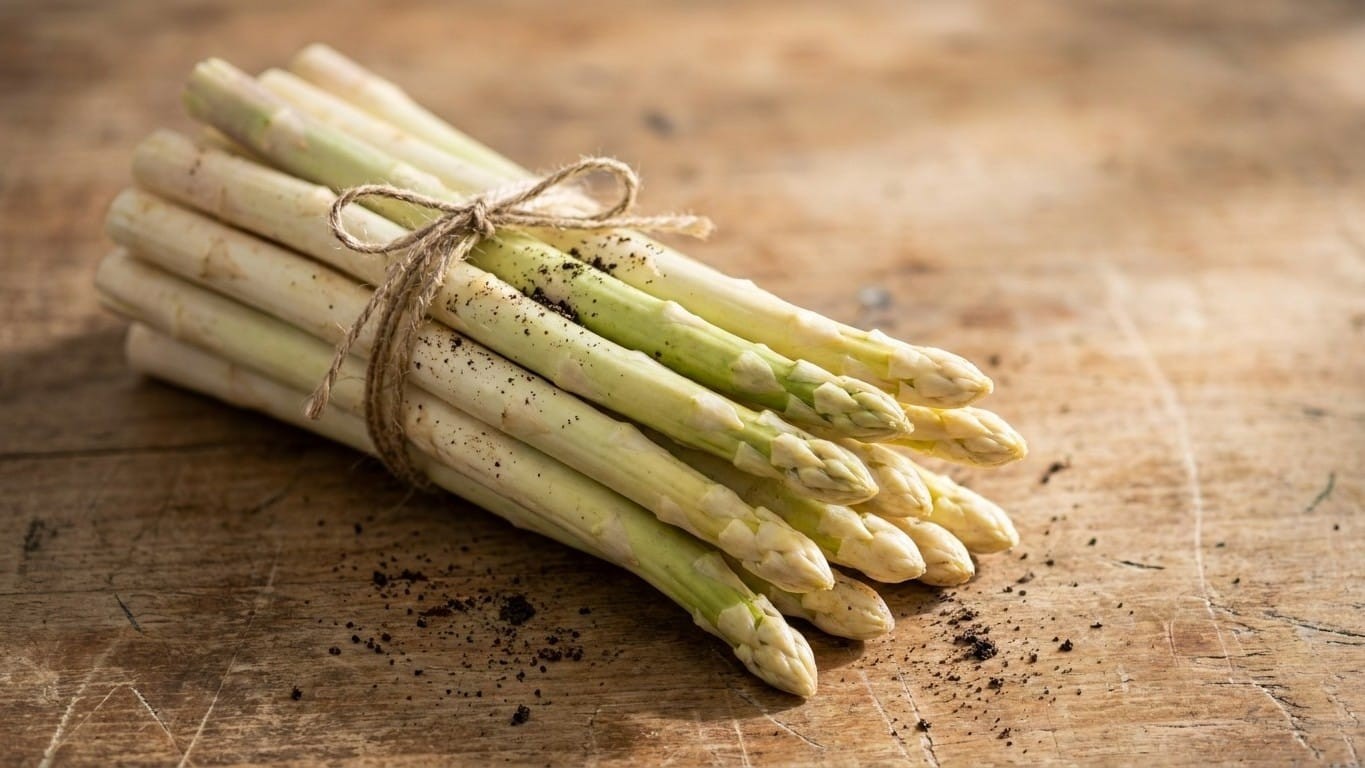
This is the offer of the century. No need to guess. The quotation on April 16, 2026 on the Rungis wholesale market shows French white asparagus at €9.46/kg. To put things in perspective, the usual market average is around €12.31/kg. The gap is almost 23% in your favor. Your premier is right to tell you this. The slot is open. It will probably close again after this weekend.
Why did the price of white asparagus collapse in ten days?
The answer can be summed up in one word: sun.
In late March and early April 2026, the weather was particularly sunny. This heat caused a jump in the quantities produced. White asparagus grows under mounds of earth, sheltered from light, but they are hypersensitive to the heat of the soil. When the thermometer rises suddenly, the rod rises with it.
Producers harvest by hand, seven days a week. Volumes have exploded.
- The price of white asparagus has fallen by 48.4% over the last three months.
- The fall reached 30.8% during the most intense week.
If you bought asparagus in March, you paid twice as much for it as you do today. Same vegetable, same territory, same know-how. Just a spring that decided to arrive suddenly. Even market professionals are worried about the speed of this decline. This is seen as an anomaly, even by those accustomed to seasonal fluctuations.
A short pricing window: what happens after the peak?
The asparagus season generally runs from April to June, peaking in May. This limited duration is explained by the nature of the plant: the stems grow quickly after the snow melts, but their growth stops suddenly with summer temperatures.
This spring of 2026 has compressed that calendar. The volumes that should have been spread over three weeks arrived all together. Peak production is here now.
Price normalization is expected as supply stabilizes. But in the short term, the downward trend is expected to continue due to seasonal abundance. After the volume peak, the trend will reverse. When the asparagus groves have produced their weekly quota, prices will start to rise again. It’s mechanical.
A producer talks about an increase in production, saying that the heat of the last few days has boosted yields. This observation is repeated in all markets across the country. The phenomenon is national, not localized.
How to choose fresh white asparagus at the greengrocer?
According to the AOPn Asparagus de France, white asparagus represents approximately 95% of production and 75% to 80% of consumption. It is the dominant vegetable on the shelves. The quality is there this year, with generous sizes.
To recognize truly fresh asparagus, here are the essential criteria:
– The stem must be straight.
– The bud must be well closed.
– The heel should be slightly shiny.
– The stem must be undamaged and brittle.
A heel that has dried or blackened indicates several days of transportation or storage. On a market supplied directly from producers at peak harvest, this detail should not pose a problem this week.
Asparagus is an exceptional product. Its picking is manual and delicate, requiring particular know-how. Each asparagus is carefully extracted, cleaned, calibrated and placed in a cool place within four hours of emerging from the ground. This delay explains why the early produce circuit remains superior to the supermarkets: the intermediary is minimal, the freshness maximum.
How to cook white asparagus and why the price will only stay low for a few days
White asparagus lends itself to more preparations than you might think. Cold in a salad, warm with a deviled egg and fresh herbs, roasted a la plancha, or integrated into contemporary compositions, it accepts multiple interpretations.
Hollandaise sauce remains a classic. But a simple hazelnut oil vinaigrette or a drizzle of lemon butter also works, in less than twenty minutes.
The right reflex for the days to come: the Rungis quotation is public and updated daily. Your scoop passes on this price with a reasonable margin. If you see him selling asparagus at €14 or €16/kg this week, the question is worth asking.
One last figure to finish: national production reaches a little over 27,000 tonnes annually. This is not huge for a country of 68 million inhabitants, barely 400 grams per French person per year. The season is short, domestic production limited. Pricing windows like today’s are rare.
In 2024, 27,476 tonnes of asparagus were harvested in France, a barely higher volume. This confirms that the sector does not have an elastic production margin. When the sun causes volumes to soar in a few days, it is an exception, not a rule. And exceptions have an expiration date.
Sources: foodotrends.com | reussir.fr