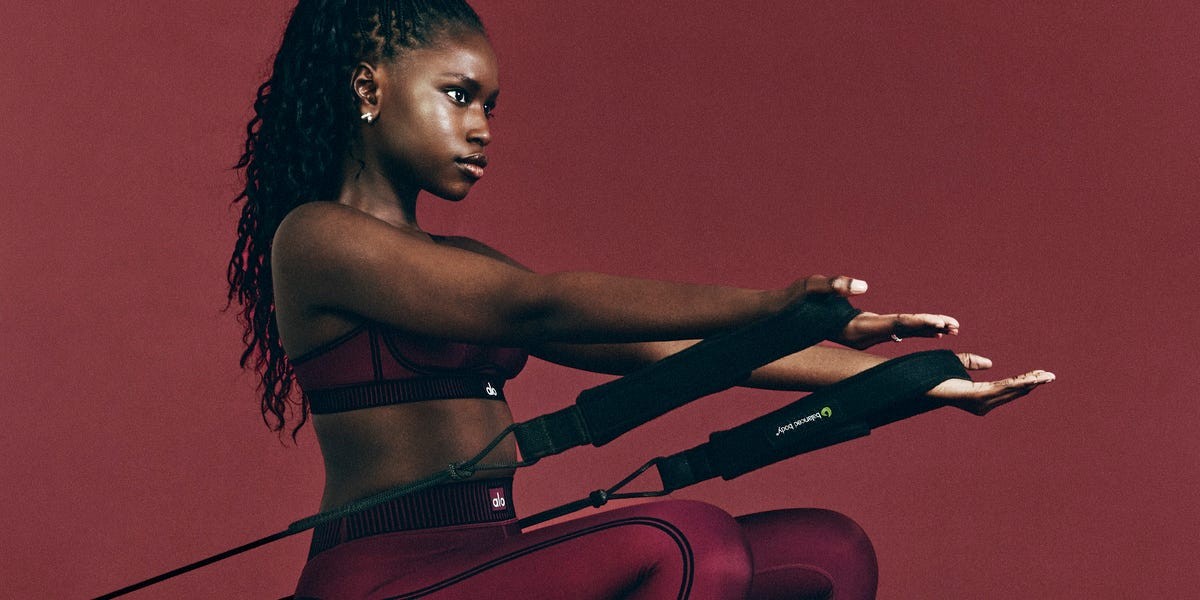
For decades, the image of Pilates has been curated by a specific aesthetic: thin, white, and affluent. While the method’s founder, Joseph Pilates, originally designed his apparatuses to be accessible tools for rehabilitation and strength, the modern industry often feels like a closed circle of luxury.
Today, a growing movement of instructors is pushing back against this “wellness gatekeeping.” By addressing racial exclusion, body size prejudice, and economic barriers, these leaders are reclaiming Pilates as the universal movement practice it was intended to be.
⚖️ Challenging the “Body Standard”
For many, the biggest barrier to entry is the feeling that they don’t “look” like a Pilates practitioner. Lindsey Leaf, creator of @FatBodyPilates, is working to dismantle the stereotype that Pilates is only for certain body types.
After discovering the method helped manage her Ehlers-Danlos syndrome, Leaf realized that most studios lacked instructors trained to support larger frames. Her work goes beyond social media influence; she has trained over 200 instructors through workshops designed to:
– Educate teachers on size-inclusive movement.
– Address unconscious biases in the studio.
– Provide practical strategies for making exercises comfortable for all bodies.
“I want to help somebody walk into a studio and feel like they are understood,” Leaf says.
🏾 Reclaiming Black History in Movement
The lack of diversity in Pilates isn’t just a modern branding issue; it is a historical erasure. Sonja R. Price Herbert, founder of Black Girl Pilates, is working to bridge this gap by highlighting the often-forgotten contributions of Black pioneers like Kathy Stanford Grant.
Herbert’s organization provides a vital ecosystem for Black instructors to find community and mentorship. This representation is crucial for the industry’s growth:
– Visibility breeds participation: When Black practitioners see themselves reflected in the teaching staff, they are more likely to join the community.
– Building on legacy: Herbert views her work not as starting from scratch, but as adding “bricks” to the foundation laid by Black ancestors in the movement space.
💰 Dismantling Economic Gatekeeping
Even if a person feels welcome, the high cost of boutique fitness often keeps Pilates out of reach. Lori Crosthwait, owner of Pilates Homeroom in New Orleans, is tackling this through economic justice.
Recognizing that movement is a right rather than a luxury, Crosthwait utilizes a sliding-scale pricing model and scholarship programs. This system is designed to be sustainable and communal:
– Tiered Pricing: Students pay based on their financial capacity, ensuring those struggling to meet basic needs can still access quality instruction.
– Community Investment: Full-price members effectively subsidize scholarships, creating a self-sustaining ecosystem of movement.
– Education over Consumption: By teaching the core principles of “Contrology,” Crosthwait empowers students to eventually practice autonomously at home, reducing long-term costs.
🧘 A Beginner’s Guide: The Universal Mat Sequence
Designed by Lori Crosthwait, this sequence focuses on spinal health and core stability. Aim for 5 repetitions of each.
- Rolling Back: Sit with knees bent, feet flat. Use your hands to pull your knees toward your chest. Round your spine and lean back slightly to hover your feet, holding for 5 breaths before rolling back up.
- Spine Stretch: Sit with legs extended wider than shoulder-width. Reach your arms forward and round your spine toward your feet, then slowly return to a seated position.
- Swan: Lie face down with hands by your shoulders. Elongate your spine by lifting your head and chest off the floor, then lower back down.
- Side Kick: Lie on your side, propped on one elbow. Lift your top leg a few inches and kick it forward (flexed foot) and back (pointed toe), keeping your torso steady.
- Pushup: Start in a plank position. This can be modified by simply holding the plank for 5 breaths if a full pushup is too strenuous.
The Bottom Line: The evolution of Pilates depends on shifting the focus from an exclusive luxury to an inclusive tool for human health, ensuring that size, race, and income are no longer barriers to movement.