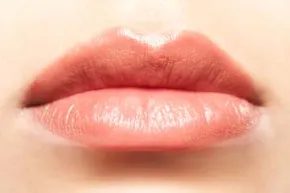
You can’t pronounce “P” without them. You certainly can’t kiss without them. And if you’ve ever tried to make a fish face in the mirror, you know exactly how important they are for comedy.
Lips are weird.
They look nothing like the skin on your arms or your cheeks. They don’t behave like it either. But underneath the surface, they’re just skin. Mostly.
The differences are what make your lips so prone to cracking when the wind picks up. Understanding why they fail is the first step to keeping them soft.
The Thin Barrier Problem
Every part of your body has an outer layer called the epidermis. That layer has a protective top coat called the stratum corneum. It’s a shield. It keeps moisture in and germs out.
Your lips have this layer. But it is microscopic compared to the rest of your body.
It’s so thin that it barely exists. That’s why your lips dry out in seconds.
Beneath the epidermis is the dermis. Lips have that too. But here is where it gets tricky.
Regular skin has sebaceous glands. These glands pump oil to keep your face hydrated. They are your natural moisturizer.
Your lips have zero sebaceous glands.
They are on their own.
The only thing keeping your lips from turning into sandpaper is saliva. And saliva evaporates fast. It also contains enzymes designed to break down food. When you lick your lips, you aren’t moisturizing them. You are basically marinating them in digestive fluid. No wonder they chafe.
No Pigment, No Protection
Most skin produces melanin. That’s the pigment that tans when you hit the beach. Melanin acts as a natural sunscreen. It absorbs UV rays and stops them from frying your cells.
Lips don’t have melanin.
They are transparent to ultraviolet light.
That makes them incredibly vulnerable to sun damage. You can get sunspots on your lips. You can get skin cancer on your lips. It happens just as easily as it does on your nose, only you rarely think to protect them.
You need lip balm with sunscreen. Not just for comfort. For survival.
Why Are They Red?
If it’s not melanin, what makes lips pink or red?
Blood vessels.
Your lips are packed with capillaries close to the surface. The thin skin allows the red blood to show through. That’s it. It’s not dye. It’s circulation.
This brings us to the vermilion border.
That’s the sharp line where the red of your lips meets the skin of your face. It’s a unique anatomical feature found only in humans. Other animals have muzzles. We have outlines.
Keeping Them Kisseable
Since lips lack oil glands, hair follicles, and pigment, they require a different approach to care.
You cannot treat them like your face.
Here is what you actually need to do to maintain healthy lips:
- Stop licking them. Saliva dries them out faster than air does.
- Use occlusive balms. Look for ingredients like beeswax, shea butter, or petroleum jelly. These create a physical barrier since your lips can’t make their own oil.
- Wear SPF. Every day. Even when it’s cloudy. Your lips will burn faster than the rest of you.
- Exfoliate gently. If they are flaky, use a soft toothbrush or a sugar scrub. Don’t pull or pick.
The Bottom Line
Lips are specialized tools. They are for speaking, kissing, and eating. But they are structurally fragile.
They don’t have the protection of thick skin, oil glands, or natural pigment. They rely entirely on external help to stay intact.
If your lips are cracked right now, stop licking them. Apply a thick balm. And for god’s sake, wear sunscreen next time you’re outside.
Your lips aren’t just for show. They are a warning system. Listen to them.